|
 |
 |
|
 |
|
 |
|
 |
|
 |
|
 |
|
 |
|

The Website of Dynasties out of Europe
The
Reference Website ...
ALMANACH DE BRUXELLES, created in 1996, is the reference
website of dynasties out of Europe
(L'ALMANACH DE
BRUXELLES, créé
en 1996, est le site de référence
des dynasties en dehors de l'Europe).
What
you get ...
- 2,690 dynasties, many of them not recorded elsewhere (2.690
dynasties, beaucoup d'entre elles introuvables ailleurs);
- 3,158 screen pages, updated and expanded every day (3.158 pages-écran, modifiées et étendues chaque jour);
- the history and traditions of your region, if you were
born or live in Africa, the Americas, Asia or the Pacific
(l'histoire et les traditions de votre pays ou
région, si vous êtes né en Afrique, en Amérique, en
Asie
et dans le Pacifique).
Subscribe
and Contribute ...
- Just
click on Subscribe or Search any of the dynasties, countries or
areas (Alphabetical Search) or on any word (full
text indexed search) (Choisissez Subscribe ou dans Search une des dynasties,
pays ou
région, par ordre alphabétique, Alphabetical Search ou
par mot, Indexed Search);
- Members of the royal families covered who contribute
information will receive three months free access
(Les membres des familles royales concernées qui
envoient des informations à l'ALMANACH DE
BRUXELLES reçoivent trois mois d'accès gratuit).
And Get
More ...
- In addition to the
1,090+ kingdoms and principalities of
India, Pakistan, Indonesia and
East Timor;
- On the surnames of the historical families of
Afghanistan;
- On the surnames of the historical families of
Azerbaijan;
- Who is the heir to Pu Yi, the Last Emperor of
China;
- On the surnames of the families related to the Royal
Family of Egypt;
- On the surnames of the families related to the Imperial
Family of Ethiopia;
- The complete list of the Caliphs, successors of Prophet Muhammad, and of the
Shia Imams;
- A situation of the Zand,
Kadjar and
Pahlavi dynasties of Iran;
- Who would be the King of Iraq if monarchy was restored;
- Most of the tribes of Iraq, a key to understand the situation
today;
- An essay on the three dynasties of Mexico:
Moctezuma,
Iturbide and
Habsbourg;
- The most important Emirates and polities of Nigeria;
- The Sultanates of the Philippines;
- The former Khanates of Russia, Ukraine and Uzbekistan;
- All the chiefdoms of Sierra Leone;
- The Shan states of Burma, Cambodia, China, Laos and
Thailand;
- And much more ...
And Also in the Glossary
...
- The
Orders and Decorations of the world;
- The Titles and Styles used;
- An Instant World Royal and Princely
Family Name Recognizer;
- The descendants of Prophet Muhammad (open to registration) ...
And Our Special Reports on ...
Africa:
A UNIQUE REVIEW OF THE EXISTING TRADITIONAL AUTHORITIES IN
SUB-SAHARAN
AFRICA
THE UNITED NATIONS: MORE TRADITIONAL
LEADERSHIP IN AFRICA
Arab names:
ARAB FIRST NAMES
HOW TO
SPELL THE ARAB
NAMES IN ENGLISH ?
Austria:
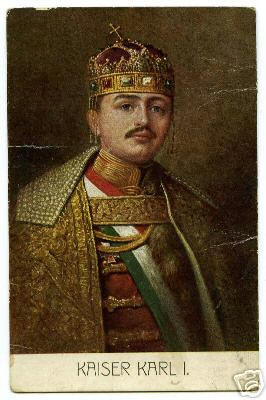
THE MANY TITLES OF BLESSED
CHARLES I, EMPEROR OF AUSTRIA AND KING OF
HUNGARY AND BOHEMIA
HABSBURG
CROWN PRINCE OTTO OF AUSTRIA-HUNGARY: THE
BIOGRAPHY OF THE MOST VISIONARY ROYAL PRETENDER
Belarus:
WHY IS BELARUS A DIFFERENT
COUNTRY FROM RUSSIA ?
Belgium:
NOBILITY AND TRADITIONAL FAMILIES IN
BELGIAN POLITICS
THE SYMBOLS OF BELGIUM
WHY
THE MONARCHY IS THE ESSENCE OF BELGIUM AND WHY
BELGIUM WILL NEVER BE
SPLIT IN TWO/La
monarchie est l'essence de la Belgique
et
voici
pourquoi la Belgique ne sera jamais divisée en deux
RECURRENT SCOOP AND HISTORICAL
ABSURDITY: BELGIAN KING LEOPOLD II'S
"GENOCIDE" IN
CONGO
Brazil:
NOBILITY IN BRAZIL
Charlemagne:
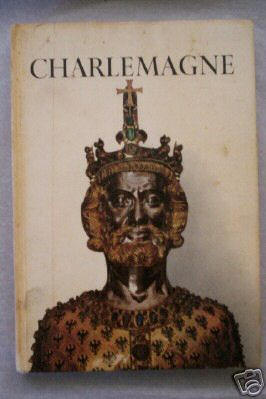
THE DESCENDANTS OF CHARLEMAGNE
China:
NOBILITY TITLES IN
CHINA
IS
THERE STILL A HEREDITARY NOBILITY
IN COMMUNIST CHINA?
Y A-T-IL
ENCORE UNE NOBLESSE HEREDITAIRE DANS LA CHINE COMMUNISTE?
THE HEREDITY OF
THE CHINESE
EMPEROR AS COMPARED WITH THE HEREDITY OF ALIEN
CHINESE
TRIBAL LEADERS
HOW IS TODAY'S
CHINA
COMPARABLE TO THE MING DYNASTY'S
CHINA
? WHAT IS THE FUTURE OF THE YUAN
CHINESE
CURRENCY?
Commonwealth:
THE COMMONWEALTH, THE LARGEST
CONCENTRATION OF KINGDOMS OF THE WORLD
Congo:
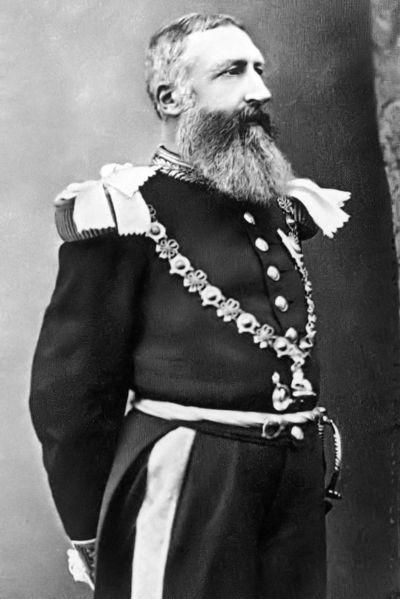
RECURRENT SCOOP AND HISTORICAL
ABSURDITY: BELGIAN KING LEOPOLD II'S "GENOCIDE" IN
CONGO
Elite:
THE OLDEST ELITE CLUBS AND ASSOCIATIONS IN THE WORLD
QUOTATIONS OF
THE ELITE
THE BEST VIVID DESCRIPTION OF
BRITISH UPPER-CLASS NOBILITY, ACCORDING TO JULIAN FELLOWES' SNOBS
Ethiopia:
ETHIOPIAN NOBILITY TITLES
Etiquette:
E-MAIL
ETIQUETTE
ETIQUETTE, HOW TO ADDRESS
AND WRITE TO ROYALS
ETIQUETTE AND PRECEDENCE
MULTICULTURAL ETIQUETTE: HOW TO ADDRESS A MARRIED
WIFE IN SEVERAL COUNTRIES
ETIQUETTE: HOW TO
ADDRESS MARRIED WOMEN IN SEVERAL COUNTRIES/Comment s'adresser aux femmes mariées dans plusieurs pays
ETIQUETTE:
A FEW TIPS TO BE SURE YOU DO NOT MISS ONE STEP IN THE SOCIAL AND
PROFESSIONAL LADDER/Savoir-vivre:
Quelques petits conseils afin que vous ne ratiez pas un
échelon de l'échelle sociale et professionnelle
RELIGIOUS ETIQUETTE:
HOW TO BEHAVE IN CHURCHES, TEMPLES, SYNAGOGUES AND MOSQUES
WESTERN ETIQUETTE: INTRODUCTION,
THE MOST CRUCIAL MOMENT TO GET TO KNOW SOMEBODY
A
FEW ANECDOTICAL DEVELOPMENTS OF WESTERN
ETIQUETTE
A FEW
UNRESOLVED ISSUES IN ETIQUETTE
Europe:
THE
EUROPEAN UNION AND THE HOLY
ROMAN EMPIRE: SIMILITUDES, DIFFERENCES AND FUTURE
EUROPEAN PARLIAMENT: NOBILITY AND TRADITIONAL FAMILIES
France:
WHO WILL
BE THE NEXT KING OF FRANCE
?
THE TITLE OF PRINCE IN
FRANCE
NOBILITY TITLES IN FRANCE/LES TITRES DE NOBLESSE EN FRANCE
THE SOVEREIGN
POLITIES CREATED BY FRENCH
EMPEROR NAPOLEON FOR HIS RELATIVES AND FRIENDS
ROYAL PRESIDENTS OF THE FRENCH REPUBLIC/La
royauté des présidents de la République française
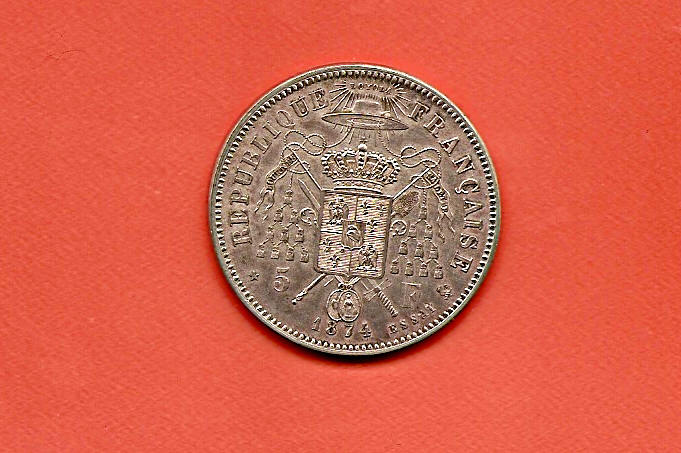
THE EXTENDED FAMILY OF THE
FRENCH PRESIDENT, NICOLAS SARKOZY (DE NAGY-BOCSA):
UPDATE/LA
FAMILLE ET LES LIENS DIRECTS ET INDIRECTS DE PARENTE DU PRESIDENT DE
LA REPUBLIQUE FRANCAISE, NICOLAS
SARKOZY (DE NAGY-BOCSA)
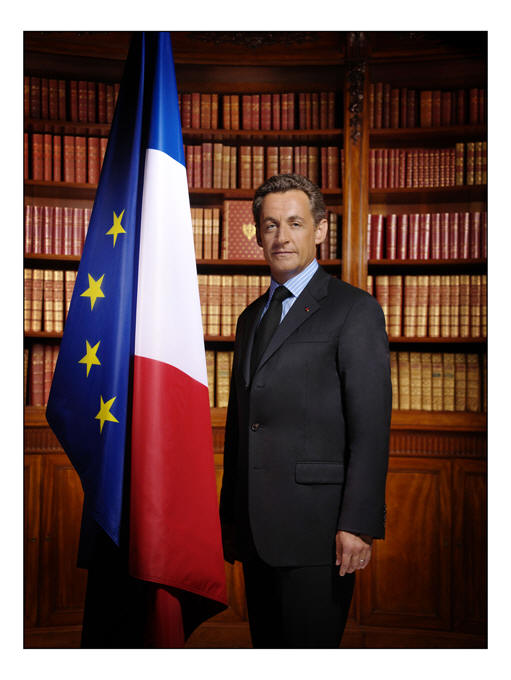
NOBILITY AND TRADITIONAL
FAMILIES IN
FRENCH ELECTIONS
FRENCH
NOBILITY AND TRADITIONAL FAMILIES IN ALL
FRENCH
WINES
THE OLD
HISTORICAL NAMES OF
FRANCE
THE
200-YEAR ADMINISTRATIVE DIVISION OF FRANCE IS
IMPOSSIBLE TO MEMORIZE by Schoolchildren, Visitors
and Most of Us, LET US RENAME MOST
OF THE 100
DEPARTEMENTS and Some of the Regions ACCORDING TO FRANCE'S HISTORY
India:
INDIAN
NOBILITY TITLES
THE GOLD
COINS OF INDIA
BEFORE AND DURING THE BRITISH RULE
Japan:
THE FORMER
JAPANESE
TITLED NOBILITY, AN INDEX OF SURNAMES AND BIOGRAPHIES 1880-1947
Luxembourg:
FIVE GENERATIONS OF ANCESTORS
OF H.R.H. THE LATE GRAND DUCHESS JOSEPHINE-CHARLOTTE OF
LUXEMBOURG
THE 118 DESCENDANTS OF
H.R.H. GRAND-DUCHESS CHARLOTTE OF LUXEMBOURG (in French)/Les 118 descendants de S.A.R. la Grande-Duchesse
Charlotte de Luxembourg
IS THERE A NOBILITY
IN THE GRAND DUCHY OF LUXEMBOURG?
LA NOBLESSE EXISTE-T-ELLE AU
GRAND-DUCHE DE LUXEMBOURG?
Malaysia:
NOBILITY IN MALAYSIA
Mauritius:
THE MORE THAN 110 ARISTOCRATIC FRENCH FAMILIES
WHO SETTLED IN MAURITIUS AND REUNION/LES 110 FAMILLES ARISTOCRATIQUES
FRANCAISES QUI SE
SONT ETABLIES A L'ILE MAURICE ET LA REUNION
Monaco:
THE SOVEREIGN PRINCE OF
MONACO, THE MOST TITLED
RULER IN THE WORLD
Monarchy:
MONARCHY IN THE 21ST
CENTURY
.jpg)
WHY MONARCHIES ARE
THE MOST STABLE AND FREE COUNTRIES IN THE WORLD/Les monarchies sont les
pays les plus stables et
les plus libres dans le monde
THE ECONOMICS OF MONARCHIES: HOW DID
MONARCHIES COPE WITH THE 2008
DEPRESSION ?
DO
KINGS DESCEND FROM GODS AND, IF SO, DO WE ALL DESCEND
FROM GODS ?
EAST MEETS WEST, HOW TO
LINK WESTERN ROYALS TO THE EAST.
Les liens entre les dynasties
européennes et l'Orient
THE SUCCESSION RULES IN
MONARCHIES
THE
CONTRIBUTIONS OF THE KINGS TO OUR VOCABULARY
Montenegro:
THE
NOBLE ACTION OF H.R.H. THE PRINCE OF MONTENEGRO IN THE
RESTORATION OF THE KINGDOM'S HISTORICAL PAST,
ENVIRONMENT AND
URBANISM
Muslims:
TITLES IN
THE MUSLIM
WORLD
THE
BEAUTIFUL NAMES OF THE MUSLIM
WOMEN AND THEIR MEANING
Nobility:
WHAT IS NOBILITY
TODAY ? A NEW DEFINITION
COUNTRIES AND DYNASTIES GRANTING OR RECOGNIZING
NOBILITY TODAY/Les pays et dynasties qui
concèdent ou reconnaissent la noblesse aujourd’hui
THE STATUS OF
NOBILITY IN SEVERAL COUNTRIES
THE BEST VIVID DESCRIPTION OF
BRITISH UPPER-CLASS NOBILITY,
ACCORDING TO JULIAN FELLOWES' SNOBS
THE CONTRIBUTION OF
ROYALTY
AND NOBILITY
TO INVENTIONS
THE BEST MODERN SOURCES ON ROYALTY AND
NOBILITY
Numismatics:
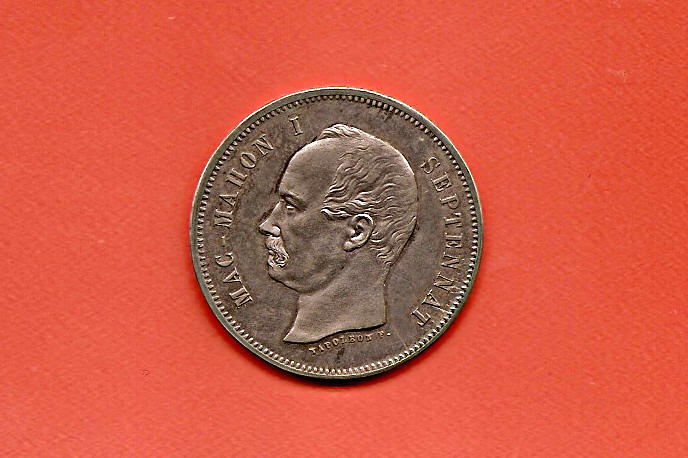
ROYAL PRETENDERS AND
NUMISMATICS
FANTASY ROYALTY AND
NUMISMATICS
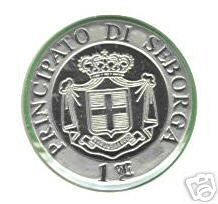
Olympics:
THE PRESIDENTS OF THE INTERNATIONAL
OLYMPIC
COMMITTEE
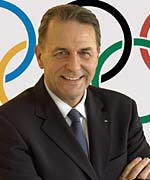
Orders & Decorations:
WHAT ARE THE LEGITIMATE HONORIFIC
ORDERS ?
HOW
TO WEAR DECORATIONS
MOST IMPORTANT REFERENCE
BOOK: The WORLD ORDER OF KNIGHTHOOD & MERIT, edited by
Guy STAIR SAINTY and Rafal HEYDEL-MANKOO at Burke's Peerage & Gentry/UN LIVRE DE
REFERENCE TRES
IMPORTANT: Le WORLD ORDER OF KNIGHTHOOD & MERIT,
publié par Guy STAIR SAINTY et Rafal HEYDEL-MANKOO chez Burke's Peerage
& Gentry
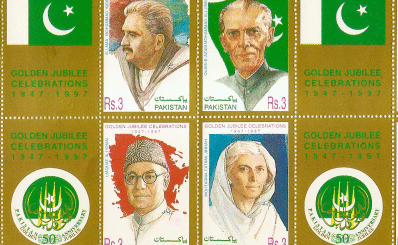
Pakistan:
THE ELITE IN PAKISTAN STAMPS
Poland:
THE
NOBILITY IN POLAND,
MONARCHIST OR REPUBLICAN ?
Portugal:
NOBILITY IN PORTUGAL
Religion:
RELIGION:
THE WORLD'S
TOP SPIRITUAL LEADERS LIST
RELIGION: THE LARGEST EVER INTERNATIONAL
INTERRELIGIOUS GATHERING, THE FUNERALS OF POPE JOHN PAUL
II
RELIGIOUS ETIQUETTE: HOW
TO BEHAVE IN CHURCHES, TEMPLES, SYNAGOGUES AND MOSQUES
WAS JESUS A ROYAL PRETENDER ?
Réunion:
THE MORE THAN 110 ARISTOCRATIC FRENCH FAMILIES
WHO SETTLED IN MAURITIUS AND REUNION/LES 110 FAMILLES ARISTOCRATIQUES
FRANCAISES QUI SE
SONT ETABLIES A L'ILE MAURICE ET LA REUNION
Royals:
CELEBRITY MEETS
ROYALTY
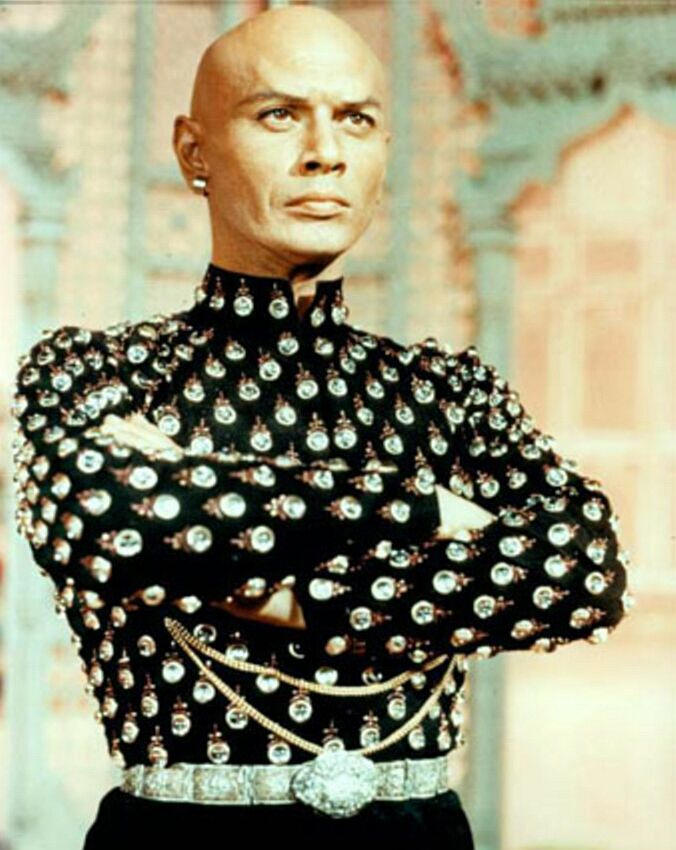
EAST MEETS WEST, HOW TO
LINK WESTERN ROYALS TO THE EAST/Les liens entre les dynasties
européennes et l'Orient
DOES ROYALTY MARRY
ROYALTY ANYMORE?
%20of%20Liechtenstein%20&%20HSH%20Pcess%20nee%20HRH%20Pcess%20Sophie%20of%20Bavaria.jpg)
DOES ROYALTY
QUALIFY TO GET IN FORBES' RICHEST
PEOPLE?
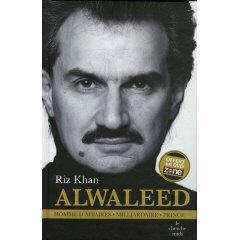
FORBES 2006 WORLD RICHEST PEOPLE IN
ROYALTY AND NOBILITY/Les milliardaires de
Forbes appartenant à la
noblesse en 2006
ROYAL PRETENDERS AND
NUMISMATICS
FANTASY ROYALTY AND
NUMISMATICS
ROMAN NUMERALS
AFTER THE NAME: DOES IT MEAN DEALING WITH
ROYALS?
Des chiffres
romains après un nom, s'agit-il de membres du Gotha ?
ROYAL STYLES
ETIQUETTE, HOW TO ADDRESS AND WRITE TO
ROYALS
THE CONTRIBUTION OF
ROYALTY AND
PRINCELY FAMILIES TO UNESCO'S WORLD HERITAGE CENTERS
THE
CONTRIBUTION OF ROYALTY
AND NOBILITY TO INVENTIONS
THE BEST MODERN SOURCES ON ROYALTY
AND NOBILITY
Thailand:
ROYAL AND NOBILITY TITLES IN
THAILAND
Turkey:
THE MAIN LEGACY OF THE OTTOMAN EMPIRE : THE MILLET
WHY
TURKEY IS A EUROPEAN
COUNTRY
Ukraine:
HOW IS UKRAINE
A DIFFERENT COUNTRY FROM RUSSIA ?
USA:
ARE THE US
PRESIDENTS, INCLUDING REELECTED 43rd PRESIDENT GEORGE W. BUSH, A KIND OF
DYNASTY ?
NOBILITY IN THE
USA
How
is the information presented?
For most of the dynasties, you will find the following
information:
- Brief story of the country or sub-country
- Sources
- Dynasty
- Religion
- Qualifications
and titles
* Dynasty Head,
* Heir,
* Dynasty Members. - Laws and decrees (including Family House Rules) governing the qualifications and titles
- Succession
- Orders and decorations
- Glossary
- Dynasty Head
- Children
- Brothers and sisters
- Dynasty members
- Predecessors
Orthograph:
The language used is English: surnames and first names
recorded in French, Italian, Spanish, etc. in official
records however are mentioned as such.
Difficulties may arise for names translated from languages using different alphabets such as Arabic and Chinese: is the correct name Abdulaziz, Abdul Aziz or Abd al Aziz ?
We have adopted as much as possible the most recent orthograph used by the family and rejected any standardization of the spelling of surnames and first names.
Contents:
All the information is derived from sources mentioned in
each section or from information contributed by our
Committee Members and by numerous visitors of our
website.
The following
rules have been adopted:
- grass letters have been used for the given name and
surname of all living dynasts, and in the Predecessors
section, for the main name of the ruler;
- no address has been provided for privacy or security
reasons, except for the palaces of ruling dynasties: when
found, the cities and countries of individual entries
have been indicated;
- if an individual is indicated without being married
while father or mother of children, it does not mean that
the children are illegitimate, it means that the name of
the mother of of the
father is not available: same
observation for missing death dates, education
references, etc.
Titles
and Style:
Styles are today very much in use:
most of the government ministers of the 190+ countries of
the world are qualified HE (His Excellency).
For members of the dynasties, the Editor follows closely the Almanach de Gotha, as the reference of all these modern styles.
The translation of titles faces the following difficulties:
- heredity may be
a different concept from today's hereditary rules in
Western countries: how is it possible to translate
precisely a Manchu Fng ng Chiang Chun
(the 12th degree of declining
nobility in the Chinese
Imperial Family) ?
- an Arab Emir, if hereditary, is translated as a Prince. An Arab Shaikh is not translated.
- colonial powers
did not want to translate titles at their present value:
for the British Empire, a Maharajadhiraj
was not a King of Kings, a Maharaja
was not a Great King and a Raja
was not
a King. The King of Lesotho was a Paramount
Chief: when gaining full independance, the Maharajas
of Bhutan, of Nepal and of Sikkim became Kings. Lesotho
and Swaziland became
Kingdoms.
- polygamy also brings different problems. There are 5,000 members of the Saudi Royal Family: are they all entitled to the qualification of Royal Highness and to the title of Prince(ss) ?
As one distinguished member of an African royal family stated, "half the country's people are royals".
All the original titles, when not translated, are in italic letters.
The Editor did not want to align the names to the Western custom of adding a first name to a family name.
Names are
therefore rendered according to public registrations
and/or to national custom: for example, a member of the
Chinese imperial family did not need to bear his family
name (Aisin
Gioro or, in Pinyin, Aixinzhueluo)
before the Communist revolution.
Family names sometime precede the first names (for example, HRH Pce Norodom Sirivudh).
Name handles (such as de, al, ibn, bin...) are rendered in small letters, except in Arabic surname equivalents (for example, Al Saud): dashes and apostrophes have been often eliminated.
African
tribe and clan names: when a tribe or a clan did not
settle in a place that was named after the tribe of the
clan, the tribe or clan name has been kept in its plural
form (for example,
the Bakalaka in Botswana). For large
ethnic states, the African name of the state has been
preferred (for example, Buganda).
Copyright 1996-2013.
All rights reserved. No copies may be made without the express
written content of the Editor that shall be obtained by e-mail in the FEEDBACK.